
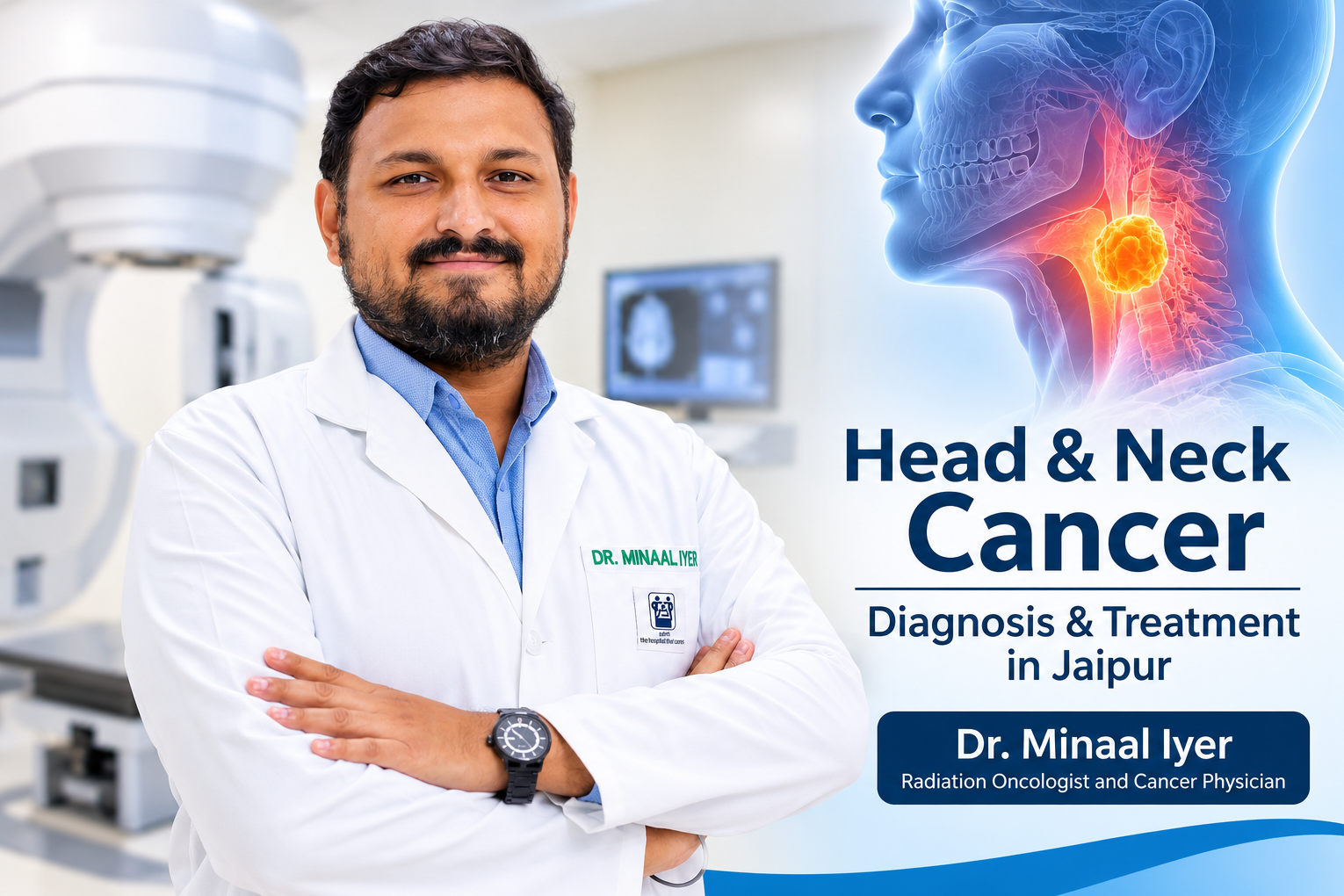
Head and Neck Cancer Diagnosis & Treatment in Jaipur | Dr. Minaal Iyer
Head and neck cancer refers to a group of cancers that develop in different areas of the head and neck, including the mouth, tongue, throat, voice box, nasal cavity, sinuses, and salivary glands. Early diagnosis and appropriate treatment planning play an important role in managing these conditions.
Recognizing unusual symptoms and consulting a qualified cancer specialist can help patients understand their diagnosis and available treatment options. If you are looking for Head and Neck Cancer Diagnosis & Treatment in Jaipur, Dr. Minaal Iyer, MBBS, MD (Radiation Oncology), provides radiation oncology consultation and personalized cancer treatment planning.
What Is Head and Neck Cancer?
Head and neck cancer develops when abnormal cells grow uncontrollably in tissues of the head and neck region. Many of these cancers begin in the squamous cells lining the moist surfaces of the mouth, throat, and other nearby structures.
Common types of head and neck cancer include:
- Oral Cancer: Cancer affecting the lips, tongue, gums, inner cheeks, and other parts of the mouth.
- Throat Cancer: Cancer developing in different parts of the pharynx.
- Laryngeal Cancer: Cancer affecting the voice box and vocal cords.
- Nasopharyngeal Cancer: Cancer developing in the upper part of the throat behind the nose.
- Salivary Gland Cancer: Cancer originating in the glands responsible for producing saliva.
- Nasal Cavity and Sinus Cancer: Cancer affecting the nasal passages and surrounding sinus cavities.
The diagnosis and treatment approach depend on the location, type, and stage of the cancer.
Common Symptoms of Head and Neck Cancer
The symptoms of head and neck cancer may differ depending on the affected area. Some symptoms can also occur due to non-cancerous conditions. However, persistent or unusual symptoms should not be ignored.
Common warning signs include:
- A mouth ulcer or sore that does not heal.
- Persistent sore throat.
- Difficulty or pain while swallowing.
- A lump or swelling in the neck.
- Changes in voice or persistent hoarseness.
- Unexplained bleeding from the mouth or nose.
- Persistent ear pain.
- Difficulty chewing or moving the tongue.
- Unexplained weight loss.
- A persistent blocked nose or breathing difficulty.
If these symptoms continue or become worse, medical evaluation is recommended.
Causes and Risk Factors of Head and Neck Cancer
Several factors may increase the risk of developing head and neck cancer. Understanding these risk factors can help people make informed decisions about their health.
Important risk factors include:
1. Tobacco Consumption: Smoking cigarettes, bidis, and consuming smokeless tobacco are major risk factors for several head and neck cancers.
2. Alcohol Consumption: Regular and heavy alcohol consumption increases the risk of certain cancers, particularly when combined with tobacco use.
3. HPV Infection: Certain types of human papillomavirus (HPV), particularly HPV-16, are associated with some cancers of the oropharynx.
4. Poor Oral Health: Certain oral health problems and long-term irritation require attention, although poor oral hygiene alone is not an established direct cause of most head and neck cancers.
5. Occupational Exposure: Exposure to certain industrial substances, chemicals, and wood dust may increase the risk of specific head and neck cancers.
Avoiding tobacco, limiting alcohol consumption, and seeking medical attention for persistent symptoms are important steps towards better health.
Head and Neck Cancer Diagnosis
Accurate diagnosis is an important part of cancer management. The diagnostic process helps identify the affected area, determine the cancer type, and assess its stage.
Depending on the patient's symptoms and medical history, diagnostic investigations may include:
Physical Examination: The doctor examines the mouth, tongue, throat, nose, and neck to identify unusual changes or swelling.
Endoscopy: A thin instrument with a camera may be used to examine specific areas of the throat, nasal cavity, or voice box.
Biopsy: A small tissue sample is collected from the suspected area and examined under a microscope to confirm the presence of cancer.
Imaging Tests: CT scans, MRI scans, and PET-CT scans may be recommended to evaluate the tumour and determine whether cancer has spread to nearby tissues or other parts of the body.
HPV Testing: In selected cases, testing may be performed to identify HPV-related cancer, particularly in oropharyngeal cancer.
The investigations required depend on the suspected cancer type and individual clinical condition.
Head and Neck Cancer Treatment in Jaipur
Head and neck cancer treatment depends on several factors, including the location of the tumour, cancer stage, patient's overall health, and treatment goals.
Treatment options may include surgery, radiation therapy, chemotherapy, targeted therapy, immunotherapy, or a combination of these approaches.
1. Radiation Therapy
Radiation therapy is an important treatment option for many types of head and neck cancer. It uses carefully planned high-energy radiation to damage cancer cells and control tumour growth.
Depending on the patient's condition, radiation therapy may be recommended as the primary treatment or after surgery. It may also be combined with chemotherapy in selected cases.
Modern radiation treatment planning techniques help define the treatment area while reducing unnecessary radiation exposure to surrounding healthy tissues.
2. Surgery
Surgery may be recommended to remove cancerous tissue from the affected area. The type of surgical procedure depends on the tumour's location, size, and extent.
Some patients may require additional treatment, such as radiation therapy or chemotherapy, after surgery.
3. Chemotherapy
Chemotherapy uses anti-cancer medicines to destroy or control cancer cells. It may be used along with radiation therapy or other treatments depending on the cancer type and stage.
4. Targeted Therapy and Immunotherapy
Targeted therapy focuses on specific features of cancer cells, while immunotherapy helps the immune system recognize and fight cancer.
These treatments may be considered for selected patients based on their cancer characteristics and medical evaluation.
Role of Radiation Therapy in Head and Neck Cancer
Radiation therapy plays an important role in the management of many head and neck cancers. It may be recommended to control cancer at its original site, treat nearby lymph nodes, reduce the risk of recurrence after surgery, or provide relief from certain cancer-related symptoms.
The radiation oncologist evaluates the patient's medical reports, imaging results, biopsy findings, and overall health before preparing an individualized treatment plan.
The treatment schedule, radiation dose, and technique are determined according to the patient's specific requirements.
Possible Side Effects of Head and Neck Cancer Treatment
Treatment-related side effects vary from person to person depending on the treatment method, radiation area, dose, and overall health.
Some possible side effects include:
- Dry mouth.
- Difficulty swallowing.
- Mouth ulcers or soreness.
- Changes in taste.
- Skin irritation in the treated area.
- Fatigue.
- Hoarseness or voice changes.
- Reduced appetite.
Regular follow-up and supportive care can help patients manage treatment-related effects. Nutritional guidance, oral care, hydration, and swallowing support may also be recommended when required.
Patients should discuss any new or worsening symptoms with their treating medical team.
Why Is Early Diagnosis Important?
Early diagnosis helps identify cancer before it progresses further in many cases. It also allows doctors to evaluate treatment options according to the disease stage and the patient's health.
Consulting a specialist for persistent mouth ulcers, swallowing difficulties, voice changes, or unexplained neck swelling can help identify the underlying cause.
Patients diagnosed with head and neck cancer should discuss their reports and treatment options with an appropriate multidisciplinary cancer care team.
Head and Neck Cancer Specialist in Jaipur – Dr. Minaal Iyer
Dr. Minaal Iyer, MBBS, MD (Radiation Oncology), is a Radiation Oncologist and Cancer Physician in Jaipur and a Consultant Radiation Oncologist at SDMH Hospital, Jaipur.
She provides radiation oncology consultation and individualized treatment planning for patients with different types of cancer, including head and neck cancer.
Her approach focuses on understanding each patient's medical condition, reviewing diagnostic reports, discussing suitable treatment options, and planning radiation therapy according to individual requirements.
Patients seeking Head and Neck Cancer Treatment in Jaipur can consult Dr. Minaal Iyer for specialist guidance regarding radiation therapy and cancer management.
Frequently Asked Questions (FAQs)
Q1. What are the early symptoms of head and neck cancer?
Early symptoms may include persistent mouth ulcers, difficulty swallowing, a lump in the neck, continuous sore throat, unexplained bleeding, and changes in voice. Persistent symptoms should be medically evaluated.
Q2. How is head and neck cancer diagnosed?
Diagnosis may involve physical examination, endoscopy, biopsy, CT scans, MRI, PET-CT, and other investigations depending on the suspected cancer type.
Q3. Is radiation therapy used for head and neck cancer?
Yes. Radiation therapy is commonly used for several types of head and neck cancer. It may be given alone or combined with surgery or chemotherapy depending on the patient's condition.
Q4. Can head and neck cancer be treated without surgery?
Some head and neck cancers can be treated without surgery, using radiation therapy alone or in combination with other treatments. The appropriate approach depends on the cancer type, location, and stage.
Q5. When should I consult a cancer specialist?
You should seek medical evaluation if you experience persistent mouth ulcers, swallowing difficulties, unexplained neck swelling, continuous hoarseness, or other unusual symptoms.
Q6. Where can I consult a radiation oncologist for head and neck cancer in Jaipur?
Patients can consult Dr. Minaal Iyer, MBBS, MD (Radiation Oncology), at Chamber No. 506, SDMH Hospital, Bhawani Singh Road, Rambagh, Jaipur.
Book a Consultation with Dr. Minaal Iyer
If you or a family member has been diagnosed with head and neck cancer, consulting a radiation oncologist can help you understand the available treatment options and develop an appropriate treatment plan.
Dr. Minaal Iyer
MBBS, MD (Radiation Oncology)
Radiation Oncologist and Cancer Physician
Chamber No. 506, SDMH Hospital, Bhawani Singh Road, Rambagh, Jaipur – 302015.
Contact: 08042781203
Keywords