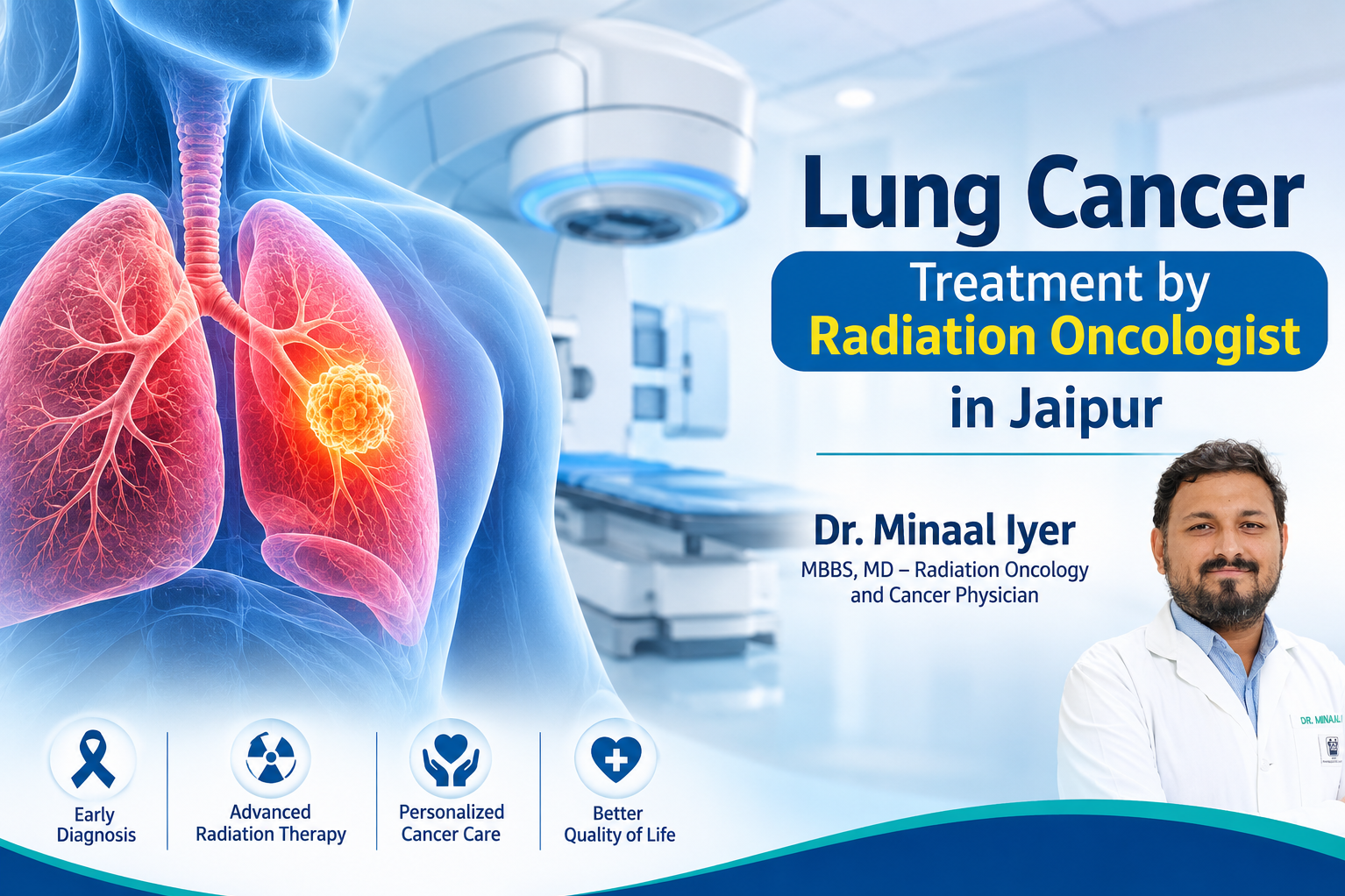
Lung Cancer Treatment by Radiation Oncologist in Jaipur | Dr. Minaal Iyer
Lung cancer is a condition in which abnormal cells grow uncontrollably in the tissues of the lungs. It is one of the major types of cancer and can affect people with or without a history of smoking. Early diagnosis and appropriate treatment planning play an important role in managing the disease. Depending on the type, stage, and overall health of the patient, lung cancer treatment may involve radiation therapy, surgery, chemotherapy, targeted therapy, immunotherapy, or a combination of these approaches.
For individuals seeking information about lung cancer treatment in Jaipur, Dr. Minaal Iyer, MBBS, MD Radiation Oncologist and Cancer Physician, provides consultation and guidance regarding radiation-based cancer treatment and management.
Understanding Lung Cancer
Lung cancer develops when abnormal cells in the lungs begin multiplying without normal control. These cells may form a tumour and, in some cases, spread to nearby tissues, lymph nodes, or other organs.
Lung cancer is broadly classified into two main types:
- Non-Small Cell Lung Cancer (NSCLC): This is the most common type of lung cancer. It includes adenocarcinoma, squamous cell carcinoma, and large cell carcinoma.
- Small Cell Lung Cancer (SCLC): This type generally grows and spreads more quickly than non-small cell lung cancer and requires timely medical evaluation.
Identifying the type and stage of lung cancer helps doctors determine an appropriate treatment approach.
Common Symptoms of Lung Cancer
The symptoms of lung cancer may vary depending on the tumour's size, location, and stage. Some people may not experience noticeable symptoms during the early stages.
Common symptoms include:
- Persistent cough that does not improve
- Coughing up blood or blood-stained sputum
- Chest pain or discomfort
- Shortness of breath
- Frequent respiratory infections
- Unexplained weight loss
- Loss of appetite
- Persistent fatigue and weakness
- Hoarseness or changes in voice
If these symptoms persist, medical evaluation is important. Coughing up blood or experiencing significant breathing difficulty requires prompt medical attention.
Risk Factors Associated with Lung Cancer
Several factors may increase the risk of developing lung cancer. These include:
- Smoking: Tobacco smoking is one of the leading risk factors for lung cancer.
- Second-hand Smoke: Regular exposure to tobacco smoke can also increase the risk.
- Air Pollution: Long-term exposure to certain air pollutants may contribute to lung cancer risk.
- Radon Exposure: Radon is a naturally occurring radioactive gas that can accumulate indoors.
- Occupational Exposure: Exposure to substances such as asbestos, silica, and certain industrial chemicals may increase risk.
- Family History: A family history of lung cancer may contribute to an individual's risk.
Not every person with lung cancer has these risk factors, and the disease can also occur in people who have never smoked.
Diagnosis of Lung Cancer
Accurate diagnosis is essential for deciding the appropriate treatment plan. Doctors may recommend different investigations depending on the patient's symptoms and medical history.
Common diagnostic procedures include:
- Chest X-ray: Helps identify abnormal areas in the lungs.
- CT Scan: Provides detailed images of the lungs and surrounding structures.
- PET-CT Scan: Helps evaluate the spread and metabolic activity of cancer.
- Bronchoscopy: Allows doctors to examine the airways and collect tissue samples when required.
- Biopsy: Helps confirm the presence and type of cancer cells.
- Molecular Testing: Identifies specific genetic changes that may help guide targeted treatment.
The results of these investigations help determine the stage and characteristics of lung cancer.
Radiation Therapy for Lung Cancer
Radiation therapy is an important treatment option for several types and stages of lung cancer. It uses carefully planned, high-energy radiation to damage cancer cells and control their growth while limiting exposure to surrounding healthy tissues.
A radiation oncologist evaluates the patient's reports, tumour location, cancer stage, and overall health before recommending radiation treatment.
Different radiation therapy techniques may be considered depending on the clinical situation.
1. External Beam Radiation Therapy (EBRT)
External beam radiation therapy uses specialised equipment to deliver radiation from outside the body towards the tumour. Treatment is planned using imaging and computer-based techniques to target the affected area.
2. Stereotactic Body Radiation Therapy (SBRT)
SBRT delivers highly focused radiation in a limited number of treatment sessions. It may be recommended for selected patients with early-stage lung cancer, particularly when surgery is not suitable.
3. Intensity-Modulated Radiation Therapy (IMRT)
IMRT is an advanced radiation planning technique that adjusts radiation intensity across different areas of the treatment field. It helps deliver radiation to the tumour while reducing exposure to nearby healthy organs.
4. Palliative Radiation Therapy
Palliative radiation therapy may be used to relieve symptoms caused by lung cancer, such as pain, bleeding, or breathing-related discomfort. Its purpose is to improve quality of life rather than necessarily cure the disease.
Other Treatment Options for Lung Cancer
Radiation therapy may be used independently or alongside other treatments. The treatment approach depends on the cancer type, stage, molecular characteristics, and patient's condition.
- Surgery: May be considered for selected patients with localised lung cancer.
- Chemotherapy: Uses medicines to destroy cancer cells or slow their growth.
- Targeted Therapy: Uses specific medicines that act on certain molecular changes in cancer cells.
- Immunotherapy: Helps the immune system recognise and fight cancer cells.
- Combined Treatment: Radiation therapy may be combined with chemotherapy, immunotherapy, or other treatments when clinically appropriate.
A multidisciplinary team may participate in treatment planning to ensure that different treatment options are considered.
Why Consult a Radiation Oncologist for Lung Cancer?
A radiation oncologist specialises in the use of radiation therapy for cancer treatment. Their role includes evaluating medical reports, determining whether radiation therapy is suitable, planning radiation delivery, and monitoring patients during treatment.
Consultation with a radiation oncologist can help patients understand:
- Whether radiation therapy is suitable for their cancer stage.
- Which radiation technique may be appropriate.
- The expected number of treatment sessions.
- Possible side effects and their management.
- Whether radiation should be combined with other cancer treatments.
- Follow-up care after completing treatment.
Lung Cancer Treatment in Jaipur – Consult Dr. Minaal Iyer
Dr. Minaal Iyer is an MBBS, MD Radiation Oncologist and Cancer Physician in Jaipur. She provides consultation for patients seeking information and medical guidance regarding different cancer conditions, including lung cancer.
Her role as a radiation oncologist involves evaluating patients for radiation-based treatment approaches and helping them understand available treatment options based on their diagnosis and medical reports.
Patients seeking lung cancer treatment by a radiation oncologist in Jaipur can consult Dr. Minaal Iyer to discuss their condition, diagnostic findings, treatment possibilities, and follow-up requirements.
Consultation Details:
Doctor: Dr. Minaal Iyer
Qualification: MBBS, MD – Radiation Oncology
Speciality: Radiation Oncology and Cancer Care
Location: Jaipur, Rajasthan
Website: https://www.drminaaliyer.in
Frequently Asked Questions:
1. What is the role of radiation therapy in lung cancer treatment?
Radiation therapy uses high-energy radiation to destroy or control cancer cells. It may be used as the primary treatment, after surgery, alongside chemotherapy, or for symptom relief, depending on the cancer stage.
2. Can lung cancer be treated with radiation therapy alone?
Yes, radiation therapy alone may be suitable for selected patients, particularly some patients with early-stage lung cancer who cannot undergo surgery. The decision depends on individual medical findings.
3. Is radiation therapy painful?
The radiation delivery procedure is generally painless. However, some patients may experience side effects during or after treatment.
4. What are the common side effects of lung cancer radiation therapy?
Possible side effects include fatigue, difficulty swallowing, cough, skin irritation, and inflammation of lung tissue. Side effects depend on the treatment area and radiation dose.
5. How many radiation sessions are required for lung cancer?
The number of sessions varies according to the cancer type, stage, treatment technique, and individual treatment plan. Some patients may require a few sessions, while others need treatment over several weeks.
6. When should I consult a lung cancer specialist?
Individuals experiencing persistent cough, coughing up blood, unexplained weight loss, chest pain, or breathing difficulties should seek medical evaluation.
7. Where can I consult a radiation oncologist for lung cancer treatment in Jaipur?
Patients seeking consultation for lung cancer radiation treatment in Jaipur can visit Dr. Minaal Iyer's website at https://www.drminaaliyer.in for consultation information.
Conclusion
Lung cancer requires careful diagnosis, staging, and an individualised treatment approach. Radiation therapy plays an important role in managing different stages of lung cancer and may be used alone or in combination with other cancer treatments. Understanding available treatment options helps patients make informed decisions about their care.
For consultation regarding Lung Cancer Treatment in Jaipur, patients can connect with Dr. Minaal Iyer, Radiation Oncologist and Cancer Physician, to discuss diagnosis, radiation therapy options, and treatment planning.
Keywords