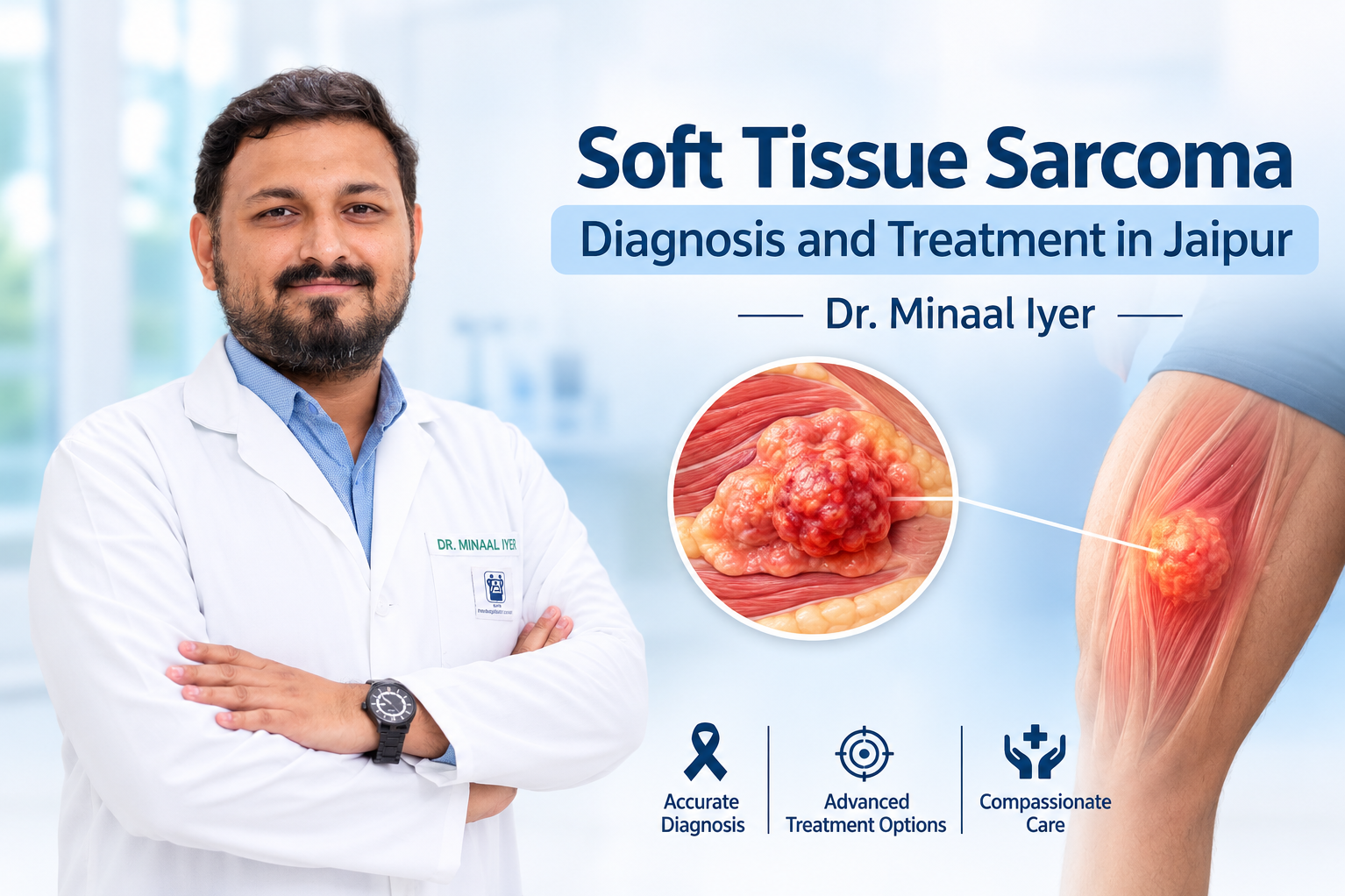
Soft Tissue Sarcoma Diagnosis and Treatment in Jaipur | Dr. Minaal Iyer
Soft tissue sarcoma is a rare type of cancer that develops in the body's connective and supporting tissues, including muscles, fat, nerves, blood vessels, and fibrous tissues. It can occur in different parts of the body, such as the arms, legs, abdomen, chest, and other soft tissue areas. Early identification, accurate diagnosis, and an appropriate treatment plan are important for managing this condition.
Patients looking for soft tissue sarcoma diagnosis and treatment in Jaipur can consult Dr. Minaal Iyer, Consultant Radiation Oncologist at SDMH Hospital, Jaipur, for evaluation and guidance regarding radiation therapy and cancer treatment.
What Is Soft Tissue Sarcoma?
Soft tissue sarcoma is a group of cancers that originate in the body's soft tissues. Unlike many other cancers, it can develop in almost any part of the body. There are several types of soft tissue sarcoma, and each may behave differently depending on its location, size, and grade.
Some commonly known types include:
- Liposarcoma – develops in fatty tissues.
- Leiomyosarcoma – develops in smooth muscle tissue.
- Rhabdomyosarcoma – develops in skeletal muscle-related cells.
- Synovial sarcoma – often develops near joints.
- Fibrosarcoma – develops in fibrous connective tissue.
- Angiosarcoma – develops in blood or lymphatic vessel lining cells.
Understanding the specific type of sarcoma helps doctors determine the appropriate treatment approach.
Common Symptoms of Soft Tissue Sarcoma
Symptoms may vary depending on the location and size of the tumour. In the early stages, some patients may not experience noticeable discomfort.
Common signs include:
- A growing lump or swelling under the skin.
- A lump that gradually increases in size.
- Pain or tenderness in the affected area.
- Difficulty moving an arm or leg when a tumour is near a joint.
- Abdominal discomfort or swelling.
- Unexplained pressure on nearby nerves or organs.
A growing or persistent lump should be medically evaluated, particularly if it is increasing in size, deep-seated, or larger than approximately 5 cm.
Causes and Risk Factors
The exact cause of soft tissue sarcoma is not always known. However, certain factors may increase the risk of developing this condition.
These include:
- Previous exposure to radiation therapy.
- Certain inherited genetic conditions.
- Family history of specific cancer-related syndromes.
- Exposure to certain industrial chemicals in particular circumstances.
- Long-term lymphoedema in some cases.
Having a risk factor does not necessarily mean a person will develop soft tissue sarcoma.
Diagnosis of Soft Tissue Sarcoma
Accurate diagnosis is essential before starting treatment. The evaluation generally includes a clinical examination, imaging investigations, and tissue testing.
1. Physical Examination
The doctor evaluates the lump, its size, location, growth pattern, and relationship with nearby tissues.
2. MRI Scan
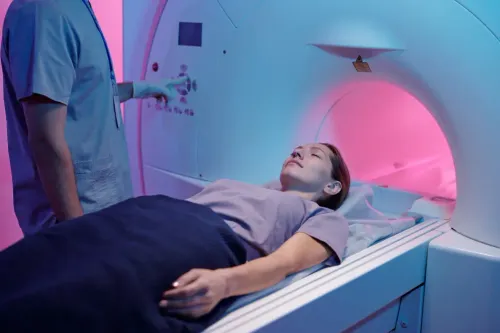
MRI is commonly used to examine soft tissue abnormalities, determine tumour size, and understand its relationship with surrounding muscles, nerves, and blood vessels.
3. CT Scan
CT imaging may be recommended to evaluate certain tumour locations and check for possible spread, particularly to the lungs.
4. Biopsy
A biopsy is an important investigation for confirming soft tissue sarcoma. A tissue sample is examined by a pathologist to identify the tumour type and grade.
5. Additional Investigations
Depending on the diagnosis, additional imaging and laboratory investigations may be advised to determine the stage and plan treatment.
Treatment Options for Soft Tissue Sarcoma
Soft tissue sarcoma treatment depends on the tumour type, grade, size, location, stage, and the patient's overall health. A multidisciplinary team may include surgical oncologists, radiation oncologists, medical oncologists, radiologists, and pathologists.
Common treatment approaches include:
1. Surgery
Surgery is often an important part of treatment for localized soft tissue sarcoma. The objective is to remove the tumour while preserving as much healthy surrounding tissue and function as possible.
2. Radiation Therapy
Radiation therapy uses high-energy radiation to target cancer cells. It may be recommended before surgery to help reduce the risk of local recurrence or after surgery to address the risk of remaining microscopic cancer cells.
Radiation therapy may also be considered in selected cases where surgery is not suitable or for symptom management.
3. Chemotherapy
Chemotherapy uses medicines to destroy or control cancer cells. It may be recommended for selected types and stages of soft tissue sarcoma, depending on the tumour's characteristics.
4. Targeted Treatment
Certain soft tissue sarcoma subtypes may respond to targeted medicines. Treatment selection depends on the tumour's pathology and molecular characteristics.
Role of Radiation Therapy in Soft Tissue Sarcoma
Radiation therapy plays an important role in the management of selected soft tissue sarcomas. It may be used before or after surgery as part of a combined treatment plan.
Potential objectives include:
- Reducing the risk of local tumour recurrence.
- Treating microscopic cancer cells around the tumour site.
- Supporting local disease control.
- Helping manage symptoms in selected advanced cases.
The timing, technique, and dose of radiation are decided according to the tumour location, surgical plan, and individual treatment requirements.
Soft Tissue Sarcoma Treatment in Jaipur – Dr. Minaal Iyer
Dr. Minaal Iyer is a Consultant Radiation Oncologist at SDMH Hospital, Jaipur. She has an MBBS and MD in Radiation Oncology and is involved in the evaluation and radiation treatment planning of patients with cancer.
For patients diagnosed with soft tissue sarcoma, radiation oncology consultation can help determine whether radiation therapy is appropriate as part of their overall cancer treatment plan.
Treatment decisions are made according to the patient's diagnosis, pathology reports, imaging findings, tumour stage, and overall health condition.
When Should You Consult a Doctor?
Medical consultation is recommended if you notice:
- A lump that continues to grow.
- Persistent swelling in the arms, legs, or other body areas.
- Unexplained pain or discomfort near a lump.
- Difficulty with movement due to swelling.
- A previously diagnosed soft tissue tumour requiring further evaluation.
Early medical assessment can help identify the condition and guide further investigations.
Conclusion
Soft tissue sarcoma requires accurate diagnosis and an individualized treatment approach. Depending on the type and stage of the tumour, treatment may involve surgery, radiation therapy, chemotherapy, or targeted medicines. Timely evaluation and coordination between different cancer specialists are important for treatment planning.
Keywords